Saturday, 7 March 2009

cats

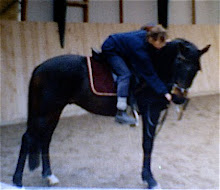
This is for Gianna, with belated congrats on her second blogiversary.


Lucky

Benedict

Kiri (...and the hairy, off-white thing in the foreground is Spiff, the westie)

Thursday, 5 March 2009

How to prevent change

I just realized that it's the 5th of March today. I realized, because a discussion (closed list) made me think of the "Bedre vilkår"-demonstration and hearing, that took place on March 5th, last year.

Has anything changed (for the better) in the Danish mh system since then? Nope. Nothing. Does anyone even talk about the demonstration or the hearing anymore? Does anyone mention the following hearing in fall 2008? No. No one. Why not? My guess: because a huge part of the criticism isn't really criticism of the mh system as such. It is the call for more hospital beds, and more research - into new, "better" medications. And it is this huge part of the criticism, that asks everyone else, everyone, who calls for human rights to be fully, without exception, respected by the mh system, to please!, compromize. Compromize? On human rights??? I should think not.

Wednesday, 4 March 2009

"Is it time for ISPS to remove the term 'schizophrenia' from its name?"

Some more thoughts about the ISPS, and about diagnoses, human nature and power imbalances in our egocentric culture.

So, looking at the ISPS Denmark, basically, what have we got? A semi-professional* organization, who, in spite of what its name might suggest, doesn't really regard psychological treatments as having the potential to, successfully replace medical treatment of extreme states of mind, but merely sees these psychological interventions as a means to get people, successfully, hooked on psych drugs. For life.

The Danish - and obviously also the Swedish - group consists, as I say in a comment at Gianna's blog, of a bunch of drug pushers, whose aim it is, to consolidate the "patients' " compliance to the drug "treatment" by massive indoctrination. Which, in their terminology becomes "dialogue". Well, yes, as a matter of fact and undeniably it is a good thing to know at least the basics of psychology if you want to make your indoctrination as efficient as possible. It's called "mind control", and, yes, it has got everything to do with psychology.
_______________

The ISPS' central, international organization recently launched "Psychosis", a journal with articles related to psychological treatment options for extreme states of mind. The table of contents reflects two things:

1. the wide range of - fundamentally - different views on so-called "psychosis" inside the ISPS, and

2., as I point out in a comment on Gianna's post on the journal, and especially on one - great! - article featured in its first issue, the power balance between the labelling and the labelled. Or maybe I should say: the somewhat grotesque power imbalance between those two groups. Again, we here have a medium, that chooses to give about 90% of its space to professionals theorizing about the experience, and about those, who have/had it.

Well, at least it seems, it's not 100%... And, and this is really groundbreaking!, the journal doesn't advertise. No Zyprexa, Risperdal, Seroquel, or whatever else ads. Incredible! Congrats on that one, ISPS!

But - no, I'm not finished with you guys! - the journals name is "Psychosis". What exactly is "psychosis"? Let me tell you:

"Psychosis" is, just as any other psych label, the Establishment's - unfortunately widely successful - attempt to pathologize human nature - in favor of the culture represented and promoted by the Establishment.

Most people aren't aware of the fact, that natural does not equal to normal. Be sure, it so doesn't! Actually, the more our culture moves away from what is natural, the less these two adjectives do equal. Thus, driving a car is completely normal, although it isn't the least natural. It's a cultural phenomenon. It is judged by cultural norms and values as being normal.

While in nature things just are, or are not, without becoming judged, in culture things become measured and judged by the at any time given cultural norms and values. So, the things that in nature just are, in culture become normal, or abnormal, worthy, or unworthy, good, or bad (mad??), etc. And the more a culture moves away from nature, the more things it measures and judges in this way. And the more rigorously it divides normal from abnormal, worthy from unworthy, good from bad, etc .

It is the ego that makes us cultural beings, in addition to being natural beings. It is the ego that needs to measure and judge, in order to delimit itself from the oneness, that nature is, in order to define itself as a unique individual. Or as a unique, individual culture. And when the ego rules, as it does in an ego-centered culture like our modern, western civilization, it will do everything imaginable to make the distinction between itself and the other as pronounced as possible. It will do everything imaginable to alienate the individual from its human nature, from the oneness with nature in general.

For instance by judging perfectly natural phenomena as abnormal. Or as strange, like in "alienation" (i.e. distinction, or split, schizm, like in "schizophrenia" - who is really "schizophrenic" here???) - from nature.

While anyone can relate to and identify with (identification = oneness) emotions and states of mind like anger, fear, confusion or joy, and quite easily can understand for instance "extreme confusion", because they've experienced confusion themselves, it gets a whole lot more difficult, if not impossible, to relate to, identify with, and thus to understand "schizophrenia" or "psychosis".

While anger, fear, confusion, joy etc. are viewed as normal by our culture, the extremes of these emotions aren't described as lying end to end with, and as, indeed, being basically the same in their nature as the as normal judged intensity of these same emotions, but as diametrically opposed to it, as abnormal, strange, unintelligible, pathologic, sick. And in order to ram this home, in order to cement it in people's perception, the extremes got renamed. With pathologizing labels. "Psychosis". Meaning: not to be understood. Or: meaningless. While it is our nature to always and in everything look for meaning, for oneness, our culture has created the ultimate tool to alienate us from our own nature by creating the concept of "mental illness" (i.e. meaningless behavior, thoughts and emotions) to describe our own nature with.

"Is it time for ISPS to remove the term "schizophrenia" from its name?" Well, that depends. It depends on whether we, humanity as a whole, want to continue on our egos' and culture's path of increasing alienation from (our own) nature, on our egos' and culture's path of regression**, deeper and deeper into unconsciousness, or if we can overcome this culture's narcissism, realizing and accepting that there is nothing strange, meaningless, nothing "schizophrenic" or "psychotic" to (human) nature. Realizing and accepting that we all just are.
_______________

As my above jottings show, removing the term "schizophrenia" from ISPS' name, and replacing it with another pathologizing label, won't do. The problem is, that, basically, what my train of thought leads to is, that neither a medical nor any other degree actually qualifies anyone to guide another individual through and out of extreme states of mind. That which qualifies someone for this task is only and solely being in touch with, and conscious of their own human nature, their true self.
_______________

* Membership is open both for professionals and non-professionals.

** Note the parallel to what is described as a "schizophrenic" mechanism.

Monday, 2 March 2009

Merete Nordentoft, the OPUS-project, and The International Society for the Psychological Treatments of the Schizophrenias and other Psychoses, ISPS

The following is a rather nasty slamming of the Danish branch of The International Society for the Psychological Treatments of the Schizophrenias and other Psychoses, ISPS. So, don't get me wrong, it is not a critique of the international organization, or of any other countries' groups! - With the exception of the Swedish ISPS-group, that is.*)

I must admit, that it was a somewhat pleasant surprise when I learned, that The International Society for the Psychological Treatments of the Schizophrenias and other Psychoses, ISPS, also has a Danish branch. "They hide efficiently," I wrote in an e-mail to Daniel Mackler, since I usually don't miss important things going on in this country's mh system.

Well, apart from the fact, that even an organization, that gives high priority to psychological treatment options as help for people in extreme states of mind, does have its problems with avoiding to pathologize the individual, I thought, naive as I at times can be, that there maybe really was not just a very few helpers, that can be counted on the fingers of one hand, but maybe even a whole organization of helpers, who do take people who experience extreme states of mind seriously, and really make an effort to offer these people the kind of help they want. And well, the pathologizing we can thank Freud for. Just as we can thank him for psychoanalysis. So...

I guess, I'll have to reconsider.

For a moment, I thought I'd add a link to the ISPS to my sidebar. And yes, the American branch of the organization does actually have some very interesting articles on its site, and on the home page it says: "We promote the humane, comprehensive, and in-depth treatment of psychotic disorders." Very nice, indeed! So, maybe this really was something, I should add to my collection of recommended Danish sites?

Now, I don't just link to something without first investigating a little further what I am possibly going to recommend. - Which doesn't mean that I would be looking for 100% conformity with my own views, only. But well, one has to draw the line somewhere, right?

The first name I came across was Bent Rosenbaum, a Danish psychiatrist. This reverberated mixed emotions. The next name did no longer reverberate mixed emotions, but red alert: Merete Nordentoft.

Why red alert? Well, Merete Nordentoft, psychiatrist and one of the Danish mainstream medias' pets on the subject of "mental illness", also is the initiator of the so-called OPUS-project **). The acronym stands for "tidlig opsporing og behandling af unge psykotiske", meaning "early detection and treatment of young psychotics", which already tells me a whole lot. Alone the choice of words: them (the "psychotics") - and us. (And "opsporing" may as well be translated as "tracking down", giving the concept a whole new - somehow slightly TAC-like - dimension...)

But let's have a look at what this, allegedly so revolutionary, project actually is all about. According to the report, I link to above, treatment consists of five different initiatives: Individual dialogues, medical treatment (here we go!), psycho-education (Honi soit qui mal y pense!), social skills training, and family work (of course meaning work with your biological family, your relatives. Certainly not the "family" of your own choice, your friends. As we all know, care providers are much more fond of relatives than of friends. And they have their reasons, yahahhh!).

'Well,' you may think, ' individual dialogues does sound promising, doesn't it?' Let me tell you right away: I'll have to disappoint you. In another report on the project, that in the meantime has disappeared from the net, it was stated that the individual counselling a person is entitled to during the two-year-period she is assigned to the project, is limited to 12 - TWELVE! - in certain cases up to 24 - TWENTY FOUR! - sessions with a therapist, and that the subject of the sessions would have to be agreed upon beforehand. Yep. Unfortunately, this is not a joke. While the counselling itself definitely turns into a joke, under these circumstances.

My own course included 45 sessions, spread over the period of three and a half years. A (-n absolute) minimum, when it comes to "psychosis". And only possible because I a) wasn't twenty years old - or young - anymore, but more like two times twenty, with the according life-experience and a certain background knowledge in relevant areas (such as philosophy, literature, and, yeah, psychology/-analysis).

Because I b) was as motivated and determined as you possibly could be - not to learn how to live with a chronic, limiting illness, but to become aware of, understand, and resolve my existential problems.

Because I c) wrote - 24/7 ("I'm fond of saying psychosis does not fit the 50-minute hour -- because it goes on 24 hours." -Loren Mosher), and not for the drawer, but for my therapist to read. Which means, that, anytime, I could have a certainly imaginary but nevertheless somewhat concrete conversation with my therapist, on paper. Also at 3 a.m. in the morning, if necessary.

Because I d) wasn't additionally traumatized by a stay at a locked ward, respectively by the betrayal of my trust it would have been to arrange for such a stay against my explicit will. Something that inevitably hadn't only meant a remarkable setback in my recovery, but that under all circumstances also had ruined any trust in my therapist for good. And that in any other professional in addition. While I, at the same time, was pretty clear about what to do in case it should turn out, that there, obviously, was no trusting in humanity at all. "Suicide was my ticket out," Catherine Penney says in Take These Broken Wings, asked about what she thinks would have happened had she not met Daniel Dorman. It also was my ticket out.

Because I e) wasn't at any time drugged,

because f) nothing ever was agreed upon beforehand but date and time for the next appointment,

and last but certainly not least because I g) didn't raise to the biological bait, other than for a, luckily very short, period where I had some doubt, caused by the massive propaganda everywhere. By the way the only period of time in my entire life where I seriously contemplated suicide - the real deal, not the "I want/have to go somewhere else"-thing the voices tried to convince me of. You don't change your genes, or a chronic chemical imbalance in your neurotransmitters just like that. You can only, passively, hope, that the "medication" works its magic. But you can always become active, and change learned behavior - and recover fully.

Which brings us back to the OPUS-project. According to the report I link to above, the weekly dialogue sessions are sessions with what is called a contact-person. The term "therapist" thus has disappeared entirely from this, obviously newer report. So what. Eventually, it anyway was just a joke, wasn't it?

Well, and in this, newer, report it says under "individual dialogue":

"The dialogue treatment can include many elements: counselling, guidance, crisis intervention, psycho education, relaps prevention, psychological support of insight and actual cognitive therapy. [Ah, so there they maybe were anyway, those 12, maximum 24 sessions with a therapist??? Absolutely out of this world fantastic!]

In general, the dialogues can be scheduled according to the phase, the patient is in, like this:
Acute phase:
Contact and treatment compliance are established. The dialogues are primarily of supporting and psycho-educating character, (...)
Stabilizing phase:
The patient is supported in him continuing to follow the treatment, although he has improved. Psychological support is given for insight and acceptance, (...)
Maintenance phase:
Support is given to continue the treatment, (...)"

Under "medical treatment" you can read in detail about what exactly is supported with such a great effort and persistence:

"For most of the patients antipsychotic medical treatment has been indicated."

Really cosy it gets a little further down in the document, where it is stated, that many people in crisis experience periods of "depression" - strange, very strange indeed, that they feel down after they were made believe, they suffer from a chronic biological brain disease - which then of course preferably are treated with antidepressants, SSRIs, according to the report. Since the "depression" is to be regarded part of the biological disease, and certainly not a result of humiliating and disillusioning messages from the "helpers", that render the individual in crisis completely disempowered and helpless, no no! And since, as we all know, they've shown to be so effective, the SSRIs, yes! And by the way, no no, it is neither the so-called "antipsychotic medication", that can cause depression as a side effect!

Yah, and since both "psychotic and depressed states can cause a lot of anxiety" - no no, this is certainly not a side effect of the recommended SSRIs! - we can easily add one or the other benzo to the cocktail, that in case of a diagnozed substance abuse (and we will have to term the consumption of three different psychoactive substances on a daily basis for an indefinite period of time - it's chronic, remember?! - a substance abuse, although it hardly will be diagnozed) can get spiced up with some methadone or the like. Cheers! Or: Your health!...

If you're lucky, you then end up like Gianna, who, after almost twenty years in a medical daze, saw through the charade, and now in her fifth year, physically seriously damaged by the drugs, struggles to free herself from the prescribed psych drug hell. If you're not so lucky, you end up more or less a vegetable at some supported housing program - or like Luise.

And, in case you should be the owner of a healthy amount of scepticism, OPUS also has a solution for this:

"It often happens, that the patient doesn't wish to take medication, especially the antipsychotic medication. (...) At OPUS our philosophy has been, that, if the patient didn't want the medicine, that was found necessary for him, the patient had his reasons, and it was the task of the staff to investigate the background, educate about what the medication could be used for, and which side effects could be expected, and to try continuously to motivate acceptance of the relevant treatment." Yep. And then you end up like Gianna, or Luise, anyway. When you, because you already are in a somewhat vulnerable state of mind, can't stand the psycho-terror (being "motivated") anymore. With or without healthy scepticism.

Note that "treatment" in the above quotation equals to drugs. So, don't count on other kinds of treatment to be offered. Obviously, the weekly dialogues are not so much meant as treatment in a therapeutic fashion, as they are meant to be indoctrination. While, in a way, indoctrination is the exact opposite of therapy.

OPUS finally died as a "masterpiece", in my opinion, with the following quotation, that, characteristically, is found under "Familywork", which according to the report includes "individual meetings at the start of treatment" with the relatives, "without the patient but with the patients acceptance" - What is attempted to be saved here, by the bell? The "Nothing about us without us"-concept? Nice try. Try again! Cf. above: psycho-terror of people in extremely vulnerable states of mind - :

" - psycho education with weight on a biological model (guilt-reducing)"

How did Loren Mosher put it? " 'Biologically based brain diseases' are certainly convenient for families and practitioners alike. It is no-fault insurance against personal responsibility." And: "Biological differences 'make them different from us fundamentally,' he says. 'They're sort of a slightly different race than we are.' Mosher thinks it's all 'a way of carefully saying, 'These people are really different. And therefore we have the right to do whatever we goddamn please with them,' ' " he is quoted in this article.

Or, to put it in a slightly different way: Whether or not it costs "the schizophrenics" their lives - due to the drugs, or because suicide, quite logically and not the least sick, becomes the ticket out of an existence with a chronic brain disease - most important is, that doctors and relatives can wash their hands.

More fitting than one immediately should think, that Merete Nordentoft was awarded Den Gyldne Skalpel (The Golden Scalpel) for the OPUS-project. Reminds me of a certain Nobel Prize laureate...

And with this quite clearly stated disdain for people in crisis, the Danish branch of the ISPS, which Merete Nordentoft is a member of, and at whose International Symposium at Copenhagen in June 2009 she is going to participate as a member of the local scientific committee, died too in its shape of a pleasant surprise, and a potential link in my sidebar.
_______________

Concerning other than the "insight" and "treatment alliance" promoting "support" offered by OPUS: I had a friend who was assigned to OPUS. "A place to stay? Sorry, we can't help you with that. A job? Sorry, we can't help you with that." But the pills he got. Straight out. And all for free. He didn't even need to ask for them. Oh, and along with the pills came the message: "It's a lifelong burden." I wouldn't be surprised if he killed himself. He chose to believe in their message - and was devastated by it - although I did my very best. But it was my word against the "experts"...

This really must be termed excellent support of people in crisis.

And no, I was wrong. They don't hide. Not at all. They're right there. Having a biobiobiopsychiatrically splendid time right in the middle of Danish biobiobiopsychiatry. The members of the Danish branch of the ISPS. Obviously, promoting the "psychological treatments" in their interpretation means nothing much else than promoting "the slightly more sophisticated" version of pitch-black, poisonous pedagogy. Sad but true. But not that surprising anyway, in the country of the Jante Law.

By the way, also Lene Falgaard Eplov, who is convinced that recovery can't be anything else than learning to live with a chronic brain disease, and biopsychologist Torben Schjødt are members of the Danish ISPS group. Uhm, yah, R.I.P. ISPS Denmark.
_______________

If you should read the report on the OPUS project, note that the possibility to receive trauma related therapy isn't mentioned once throughout the entire report. Not even a superficial look at the individual in crisis' life story is mentioned. Thus it is denied in advance, that traumatic experiences can cause emotional suffering. Apropos of the persecutor at any given time doing whatever is in his power to prevent the victim - and the surroundings - from becoming aware of the abuse/mistreatment.

The report is an evaluation from the years 1998 to 2002. The OPUS-project still operates, by and large in the same way as described in the report. It's outcomes: no change in the number of people who become chronically ill and go on disability - roughly 90% of those labelled with "schizophrenia" or other "psychotic disorders" in this country. Indeed, what a masterpiece!
_______________

*) While I'm at it: A quote from the "Guidelines for practice" published by the Swedish ISPS-group: "Antipsychotics are a corner stone in the treatment of patients with psychosis. During the acute phase benzodiazepines are to be offered to treat sleepnessness and anxiety."

**) Originally, I here had a link to a paper on the OPUS-project published on Århus Universitetshospital Risskov's - Danish biopsychiatry's stronghold, setting the fashion for the psychiatric system all over the country, and the location for OPUS to, initially, be established - website. Unfortunately, the paper has disappeared from the website. Several other publications about OPUS can be found here though.

Tuesday, 24 February 2009

Gianna on Madness Radio

Will Hall has interviewed Gianna Kali of Beyond Meds for Madness Radio. Gianna talks about how she got into the mh system and her experiences with it, about spirituality, psychiatric drug withdrawal, the damage these drugs can do, her blog, and much more. She also reads a couple of posts from her blog. Especially listening to Gianna reading "Undiagnozing myself" was a deeply moving experience for me.

"So now I continue on my journey and I am undiagnosing myself. I am human and I have problems. That is the only diagnosis I am willing to live with now. Human problems. My life has not been easy. It has been no different from that of hundreds of thousands of people labeled bipolar. I still consider all who call themselves bipolar my brothers and sisters. And for that matter anyone else who has ever been labeled with any psychiatric disorder. We are family."

I remember someone once saying to me, that he got the impression, the critics didn't have much else in common than their criticism of the mh system. Well, that seems to be the impression the system communicates. Divide and rule. It seems to be the impression people get, who've never really listened to anyone of us, and who've never met someone like Gianna.

Listen to the interview here: http://www.madnessradio.net/madness-radio-beyond-meds-gianna-kali

Sunday, 22 February 2009

Awesome comment on "Take These Broken Wings"

A good year ago, I had a rather unpleasant discussion with Kirsten Sefland (she's out in public, so I'm sure, she won't mind), a mental health consumer and a fierce advocate for ect and the psychiatric "treatment" of life problems in general.

I started out with just asking Kirsten Sefland to, please, show me whatever scientific evidence in support of her views there was, while at the same time I sent her a bunch of links to relevant studies and scientific articles, that were in support of my views. I never got as much as one single link back. What I got back were somewhat emotionally loaded, personal attacks - several, yes, and, no, I'm no angel, me neither; although I, by and large, kept my cool during the e-mail correspondence, I did let go of it to a certain extent when I wrote the piece I link to... - one of them accusing me to be "one of these people because of whom young doctors chose not to become psychiatrists". I wish it were true, but I guess, it's a bit too great an honour to assume my rants and ramblings could have such an impact.

Well, someone whose work actually has such an impact, is Daniel Mackler, as this comment at Gianna's blog shows. You both go, Daniel and Bonnie!!!

Friday, 20 February 2009

Take These Broken Wings. Recovery from Schizophrenia Without Medication. A documentary by Daniel Mackler

Last month, Gianna had a post on her blog, announcing New York-therapist Daniel Mackler's documentary Take These Broken Wings. Recovery from Schizophrenia Without Medication.

I'd been visiting Daniel Mackler's website a couple of times in the past, and thought 'I need to get hold of this, it can only be awesome.'

And awesome it is! The film's main interest is to show that recovery from what psychiatry calls "schizophrenia" is possible, that "schizophrenia" is not per se a lifelong, chronic condition, that needs lifelong - and, by the way, often chronifying - medication. And, in fact, as the documentary looks at both the scientific data, reported by Robert Whitaker, the stories of Joanne Greenberg and Catherine Penney, told by themselves, and the experiences of several professionals, among them Peter Breggin, Ann-Louise Silver, Bertram Karon and Daniel Dorman, it becomes, once more, clear that recovery, full recovery, from "schizophrenia" isn't only possible, but should be expected as a matter of course.


There are especially two among the many aspects in regard to treatment and recovery the film mentions, that are intriguing to me: the difference in quality of a recovery, that is achieved without drugs, compared to a "recovery" on drugs - if at all a recovery, that still requires maintenance medication, can be termed as such - on the one hand,


and the stark discrepancy between today's "best practice" and the kind of help for people in crisis, Peter Breggin among others, advocates for, on the other.


What does it tell me about our society in general, our culture's preferences, that we, in spite of a fundamental lack of proof for its efficacy and in spite of the fact that alternatives, that have been proven to be efficient, are available, nevertheless continue to almost exclusively treat "the most vulnerable people" in the most inhumane way imaginable?

Although the film focusses on psychotherapy as treatment, Daniel Mackler acknowledges, that this is not the one and only way to recover from "schizophrenia". All roads lead to Rome, one might say. All but one.

Just as the stories of most - if not all - people diagnozed with "schizophrenia", also Joanne Greenberg's and Catherine Penney's stories are stories of childhood trauma, while their recovery stories are those of becoming aware of the trauma, working it through, understanding it - and their reaction to it. And, obviously, there are many ways of becoming aware and understanding. While there is one way, that more efficiently than anything else suppresses, even reduces, awareness and understanding, and turns out to be a dead end in the long run: lifelong "maintenance" medication, in combination with the conviction, that "schizophrenia" is a chronic, biological brain disease, caused by a chemical imbalance, its "symptoms" thus being completely without meaning, and not worth being subjected to a closer investigation - with the guidance of a psychotherapist for instance.


Take These Broken Wings is a brilliant defence of not only psychotherapy, but all alternative approaches to crisis, that aim at understanding rather than at the mere suppression of "symptoms". At the same time it manages to, convincingly, debunk the medical model, while it navigates successfully around the trap of carrying on an aggressive controversy against psychiatry, or glorifying crisis as such.


The cutting of Take These Broken Wings with rather rapidly alternating sequences from the various interviews, that serve as the film's basis, and its subtle humour and poetic choice of images, make Take These Broken Wings also on an artistic level a treat to watch.

If there is one thing about this documentary, that is a little disturbing in my opinion, it is the collision of its philosophy with its terminology. And since I regard language as extremely important - as a means of identification - I couldn't but had to let Daniel Mackler know about my concern:

"The whole concept is so refreshingly non-pathologizing, and then, anyway: 'mental illness', 'schizophrenia', 'the schizophrenics'. 

I'd so like to see that label abolished. And the pathologizing of these states of mind, it inevitably comes along with, no matter what. In retrospect, I realized, that all that had happened to me was nothing but a somewhat 'exaggerated normality'. With the extent of exaggeration of my reactions perfectly corresponding to the extent of exaggeration of the circumstances, my experiences were a belated reaction to. That seems pretty natural, even healthy to me. Not at all ill in any way. I'd say, it would have been 'ill' to react less exaggerated. The question is, if 'illness' is something that threatens one's - physical or mental - health (like the traumatizing abusiveness of our civilization), or if it is one's natural, self-preserving reaction to the threat, that is the 'illness'. And where would one draw the line between 'normal' confusion, fear, anger, and 'schizophrenia', i.e. a whole lot of confusion, fear, and anger? Personally, I wouldn't venture to think, that I ever could. Joanne Greenberg says at some point, that 'every schizophrenic knows how sick he is,' and that she thinks, 'he knows how far he is from the center of his own being.' Well, when I look around, I see almost nothing but people, "normal" people, who are miles and miles away from the center of their own being. They're just not aware of it. If 'schizophrenia' exists as an illness, these people are the 'healthy' ones, while those, who are becoming aware, are the 'sick' ones. Definitely. But if being this far away from the center of one's own being is the real illness - and I tend to believe that - then the so-called 'schizophrenics' are the ones, who actually are recovering from this illness called 'normality'.

This maybe sounds a bit far-fetched, but nevertheless I think, it hits the nail on the head: one of Germany's leading experts in horses once said, that there is no horse, who is too sway-backed, too short-legged, too nervous, or too whatever. There only are horses who are sway-backed, short-legged, nervous, etc. Now, 'schizophrenia' sounds to me like 'too afraid, too confused, too angry'. While I think, there is no such thing as 'too' in regard to (human) behavior, in regard to (human) emotions and reactions.

To me, having to label myself explicitly (for holy, indispensable insight's sake...) was maybe the most painful experience throughout the whole therapy process. Just as I'd thought that eventually someone was really seeing me, this someone asked me to close my eyes to myself, to explain myself away, instead of to become aware of myself. Anticlimax."

Well, there is an explanation for the film's choice of terminology. And there also is this guy, at Washington Square Park, who says: "It's a gift, not a mental illness, a gift." He's right. That's what it is.

You can order the film here, and watch the trailers and more clips at Daniel Mackler's YouTube channel.

Sunday, 8 February 2009

The Wind Never Lies - Steven Morgan's recovery story

You've probably already read it at Gianna's blog. Anyway, for those here who haven't, or who'd like to enjoy Steven's powerful writing in this no less powerful story once again, here is Steven Morgan's recovery story The Wind Never Lies - original pdf-version here at Vermont Recovery's website.

Thanks to Steven for allowing me to post his account here. And, yes, the diagnosis, Steven gives himself at the end also works for me. The only one, that ever has worked and ever will work for me.

The Wind Never Lies
by Steven Morgan stevenmorganjr(at)gmail(dot)com

When I was young I believed the world spoke to me. Lightning split across the sky to the pulse of my thoughts. Rings around the moon prophesized the apocalypse. My cat winked at me to let me know he understood. Clouds parted like curtains to welcome a shining God.

For most of my youth this deep connection to the Natural world mystified me, pulling me into forests and spinning my imagination wild. Then at age twenty-two I finally discovered its secret.

Earlier that year I had been diagnosed with major mental illness. Suddenly I had wondered – often painfully – how much of my past was led not by free will or cosmic connection, but by disease. As I searched for answers, I absorbed medical texts, self-help books, and bestselling memoirs. I grew increasingly vulnerable to biological explanations for my behavior – Your brain is broken – in part because these theories absolved me of guilt and responsibility for experiences that were shameful. For instance, I was relieved to learn that repeatedly tapping in patterns of three to save my grandmother’s life was caused by an overheating of my caudate nucleus. And I felt less maniacal knowing that six months contemplating death every hour was caused by low serotonin.

Yet the flipside – the explosive creativity, moments of divine insight, periods of super-wit and magnetism, communication with Nature – was not so easily resigned to biological determinism. How was I to make sense of this paradox, that while some mood swings are grave and disabling, others are rich with meaning and evolvement?

According to the respected literature Bipolar Disorder is a disease of the brain. This means I would have to deny scientific reason to cherry-pick which extremities are diseasified and which are not based on their subjective worth.

At the time, I needed answers, not another harrowing epoch of existential angst, so I adopted a mental illness worldview and began to label almost everything that veered up or down in my experiences as caused by pathology in my head. In effect, I re-authored my life story, tossing fragments of my history into clinical categories of mania and depression.

One day I came across text that specifically labeled “believing the wind is communicating with you” as a symptom of Bipolar Disorder. I immediately thought about my friend. She had also felt a deep connection to the world, and she was also diagnosed with Bipolar Disorder. We had shared moments of profound synchronicity in which the wind had danced inside our unmedicated conversations at exactly the right moment, too right to have been a coincidence.

With my new perspective, there was only one explanation for this experience and others of a similar nature. They were simply neurochemical errors devoid of meaning.

From then on, the world still spoke to me, but I stopped listening. When the wind would swarm me at too perfect a moment to be coincidental, I would remind myself, “The wind isn’t speaking to you. You have a mental illness that makes you believe otherwise.” I began to lose trust in my intuition and the significance of my experiences, and the way I made meaning of the world suddenly became a suspect for deceit. Such is the effect of being diagnosed with an illness that presumes to know your mind better than you ever can. You resign your voice and become a doubter.
***
My resignation to a forecast of disability was short-lived, however. I have always harbored a fierce independence that – whether consciously or unconsciously – puppeteers my actions, and eventually we sought to unwed mental illness. But first I had to make major life changes.

At the time I was fulfilling a typical Bipolar prognosis by living at my father’s house as an unemployed artist. My fresh diagnosis was an ace in the hole to excuse inaction, but I felt ashamed and irresponsible for not holding my weight as a man. In an effort to jumpstart my life, I dove into a respectable social program that trains and places promising college graduates as teachers in the poorest areas of the country.

Here was a chance to reclaim my dignity. Here was a challenge to prove I could be successful just like everyone else. Here was an opportunity to show my friends and family I was not a lost cause naïve to the real world and blanketed by idealism. I invested all my pride in the endeavor, throwing away my Bipolar label overnight and the sedating mood stabilizer that came with it.

My training consisted of grueling eighteen-hour work days for five weeks straight. At first I was vivacious, often praised by my colleagues for creativity and energy, but by the end I had completely burned out.

I headed to my assigned region of South Dakota with barely any life-force. In a lonely house along a dirt road, I was overwhelmed by sleeplessness, paranoia, disconnection, feelings of abandonment and utter exhaustion. Despite a desperate attempt to revive myself with exercise and meditation, I eventually fell apart and landed in a hospital.

Here is what I wrote several months after the experience:
When I walked into the hospital, slow as a ghost, my arms bloodied and face covered in agony, I noticed the hospital workers noticing me. It felt very intrusive, and I wore a scared, nervous face in front of their inquisitions, both verbal and silent.
“Soooooooo, how long you been bipolar?” The doctor’s chirpy South Dakotan accent made the question all the more intolerable. I felt like her question was cruel, invasive, insensitive, ignorant, said with a doctor’s ease while I sat there in the gloom of my misery expected to answer in a coherent way.

“What kind of question is that?” I replied. I wasn’t confrontational. Indeed, I was scared because deep down, the question made me feel more insane than I had previously acknowledged.

Even now, I can feel the humiliation of awakening in that rocky bed: eyes weighted with tears, skin torn by teeth marks, throat lined with liquid charcoal, hand punctured by IV, thoughts clouded by haldol, heart stinging with guilt, mind terrified and confused. And I recall the doctor inches away from my face holding a pill between her thumb and index finger. “This will make you feel better,” she smirked with vague condescension, as if the boundless suffering before her was just another Bipolar gone off his meds…shame on him.

I cannot explain in words the trauma of those months. What I can tell you is that for years a mark had been appearing on the center of my chest that changed in color according to my moods. Though it had arrived in a shade of light brown, the year after South Dakota it doubled in size – like a virus spreading – and deepened into a blood red. Every morning thereafter, I saw that mark in the mirror and it reminded me of my utter failure at life, as inescapable as my breath beneath it.

I wanted the rest of the world to see my pain too. One night, after drinking and ripping car keys across my forearm, I took a razor and shaved my head – a highly symbolic act since growing out my hair had led to my first girlfriends – then grabbed a knife and hacked away at my face, chest, and arms.

Alongside a second hospital stay, it was becoming too difficult to deny I had serious problems, and equally as alluring to again accept the bottomline that mental illness explained me. Tired and defeated, I stopped trying to connect the dots and came to see my breakdown in South Dakota as the result of quitting medications, getting manic, and crashing into depression. With that association in mind I became terrified of discontinuing medications ever again. And there were plenty of people to confirm the wisdom of my fear. In fact, I soon discovered that all Bipolar advice orbits around one unshakeable core: Whatever you do, no matter how good or stable you feel, NEVER quit your meds, or else…

This way of thinking is justified by the belief that Bipolar is an incurable chemical imbalance in the brain which medications help restore. Given the overwhelming presence of this theory in the media, medical texts, and amongst professionals and peers, I presumed it was backed by hard science and became invested in taking pills for the rest of my life.

I even began openly expressing to others that I was taking ‘my meds,’ as if the choice made me a ‘good patient’ worthy of inclusion and accolades. However, my emergence into a walking advertisement for the pharmaceutical companies came at the price of repressing internal conflicts. Indeed, no matter how much support and validation people offered, no matter how many times I reminded myself mine was a medical disease ‘like diabetes’ which required medical solutions, the pills never quit instilling within me their unlisted side effects of shame, unnaturalness, isolation, and dependency. It is simply impossible to forget you are crazy when you eat from five bottles of pills every day.

Still, I could not consider quitting medications because I could not think outside my experiences. To survive then, I lowered my expectations and silenced my shame.

And with that I swept away the shards of my identity, aimlessly crawling through a new world where the limit came before the sky, and I solemnly accepted that my mind would forever be prisoner to the punishment of my brain.
***

After a brief relationship resurrected feelings of abandonment, the mark over my chest was aching and my soul was sinking. In response, I sought some project to once again restore my worth. Eventually my efforts transpired into creating a film about Bipolar Disorder. I sold many of my possessions to purchase film equipment, all the while rationalizing a need to push myself into highs and lows to make the movie more realistic.

After months of mad creativity, I recall an evening where I could not form sentences from beginning to end. A couple of days later I wrote a suicide note and tucked it into my mattress, then checked into a hospital.

My previous hospitalization had been relatively helpful, but this stay was pure damage. Having my shoelaces taken away now felt degrading, pointing to stick-figured faces – Happy, Sad, Angry – while setting a daily goal now felt infantilizing, smoking in a cage with other demoralized people now felt depressing, being locked indoors after voluntarily checking-in now felt infuriating, being told not to carry on conversations with the opposite sex now felt discriminating, and being observed every fifteen minutes during my sleepless evenings now felt invasive.

Yet my integrity was buried beneath a need to be liked, so I behaved as a good patient, never connecting my humiliation to external circumstances.

After a week I lied to the psychiatrist about my suicidal status, and upon release I made a vow: I will never return to a psychiatric hospital, no matter what sacrifices are necessary to stay afloat.

To pass each day I drank just enough beers to sedate my thoughts. To pass each night I popped sleeping pills at dusk. Though I remained desiccated by suicidal thoughts for months, I knew from experience that eventually the pain would dissolve.

There was also a reason to be hopeful. While researching the aforementioned film, I had met a woman who raised money for me to attend the state’s Certified Peer Specialist Project, which trains people with psychiatric labels to work in the mental health system from a peer perspective. Though I knew nothing about this line of work, I was encouraged by the prospect of employment.

At the two-week training, I kept my recent hospitalization a secret, and was skilled enough at hiding disillusionment to push through classes for the first week. Then, over the weekend break I hiked eleven miles to a desolate beach. As I stood in front of the ocean, I was desperate to feel the force of Nature as I had in years past, but she was now vacuous and dead.

When I returned to the training I broke down sobbing to the lead facilitator. She listened to my confusion and loss, then revealed some of her own struggles, particularly as a writer. Referring to a creative project she was working on, she said, “If I don’t finish this, I will have failed at life.” At any other time, in any other context, her words would have slipped by, but instead they flipped a switch.

Suddenly I realized I too could fail at life, which meant I too could succeed, which meant that life was not just a careless unfolding but purposeful, and if she could emerge from immense struggles to inhabit meaning, perhaps I could too.

This brief sense of optimism carried me through the second week of training, and upon returning home I began the slow work of moving away from lost causes and toward some kind of intentional, integrated life.
______________________________

Jim was a 60-year old bear of a man, fluff but stern with eyes that frequently watered from inspiration. He sat on a meditation cushion on the floor to look upwards at me as a gesture of humility. There was a seriousness for truth in the air which I immensely valued. He never reduced any of my experiences to mental illness nor used any diagnostic vocabulary, but I still subscribed to those contexts for making meaning.

At our first therapy session, I poured out my Bipolar story while he listened patiently, still as a rock. In the final minutes he responded: “Now, I would like to tell you about myself.” Then he happened upon exactly the right words, in exactly the right no-bullshit tone, with exactly the right conviction: “Steven, I too am a wild man.” And he meant it.

From then on, I knew I would be leaving practicalities at the door. Our work was to map dense forests of archetypes, dreams, gods, love, manhood, and madness. He introduced me to the work of Carl Jung, whose concepts were a lantern in the darkest realms of psyche.
During our fourth meeting together, I haphazardly recalled a dream. I had always dreamed vividly, often shaken in the morning by their complexity of imagery and intensity of message. Though I had derived some truth from them in the past, I had never been able to decode their ultimate function.

The dream I spoke of contained a buffalo, who appeared near the end and told me, “Do not be afraid.” I remember feeling the dream was inconsequential, but Jim treated it with sacredness, remarking, “Steven, there is nothing meaningless about Wakan Tanka.” Wakan Tanka is the name given to the Buffalo/Great Spirit by the Lakota Sioux, whose land I had lived on while in South Dakota. Though I had failed to make the obvious connection, Jim helped me realize that the buffalo’s appearance in my dream meant something. I was being communicated with.

The more I gave attention to my dreams, the more they responded, and soon I was navigating symbols too multifaceted to be trivialized in words. The immediate effect of this experience was profoundly healing. For one, the messages directly opened up locks to expansion and elevation, but more significantly they became an umbilical cord back to God.

While diagnosis had disconnected me from others and my own experiences, my dreams mended this separation by reconnecting me to humanity, the divine, Nature, and also to the inseparableness of the three. Their mythological nature made me feel important again, as if I were decoding a great secret that was inaccessible to – or at least denied by – most people.

There was admittedly a dangerous element of ego-satisfaction (“I’m special!”) built into this process that would need addressing later on, but at the time the pride was absolutely necessary for restoring my sense of value to the world.

Of course, nine months of therapy was not all “Ah ha!” moments. There was grieving over relationships and suffering from opening the floodgates of repression and clearing the spiderwebs to my past. But Jim became a father in these scenarios, validating my secrets and loving me for the volatile creative spirit that so infused my passions yet isolated me from others. He even told me once he loved me, and he meant it, a moment of naked humanity that single-handedly patched a tear in my heart.

All of my work with psyche culminated in a peak experience. I had been reading Eastern spiritual texts for years, but despite a brief flirtation with meditation in South Dakota had yet to actualize it. One night I decided to try again, and as I sat in the moonlight in front of a white wall, a surge of energy transmuted me, presenting a ritualistic dance of truths and visions that shook my consciousness to its core. For the two months that followed, I lived behind a colorful trance through which I could see auras and vivid patterns everywhere. At first, meditation fostered this psychedelic experience, but as the intensity faded it became a vessel for me to a clearer and more direct world.

During this time of evolvement, I used my training as a peer specialist to work at a progressive recovery center for adults with diagnoses. Inspired by the beautiful people who came there, I began to grasp the concept of recovery in mental health. To me, recovery meant that I could live a meaningful life with illness. My self-conception shifted from believing disease fueled my emotions to believing disease fueled some of my emotions, and I graduated my story from I am Bipolar to I have Bipolar. Still, I was locked into psychiatric seermongering that my brain would forever be hostile in its natural state.

Then one day everything changed.
***
After moving to Vermont for a new job, I began attending meetings and trainings with individuals who were leaders in the consumer/survivor/ex-patient movement. At one of these week-long trainings, one of the facilitators was a bright and humane man whose empathic charisma immediately earned my respect. Midway through the week, he revealed he had been diagnosed with schizophrenia and was not taking medications. Now, until that moment, despite all my research and conversations, I had never met nor heard of anyone diagnosed with major mental illness who was successfully living without medications.

I was perplexed. I probed for his secret, and he smiled warmly, replying, “I believe that if this is something you want to do, you will find a way.” The integrity in withholding his path empowered me to find my own without his influence. Yet his presence was enough – a living example that life without medications was possible – to inflame my will. The second before I was staying on my chemical regime for life. Now I was interested in quitting.

I approached withdrawing with caution. There was enough distance between my present experiences and past meltdowns to forget the force of cyclonic emotions. I was terrified that my brain would revert to its diseasified operations once relieved of its medicinal police. I cut most of my doses slowly to test the outcome, while maintaining a commitment to a healthy lifestyle as fundamental to staying centered.

The whole process took six months, after which I noticed two shifts: my mind sharpened and my heart opened. Both of these factors were double-edged swords. On the one hand I could think more clearly and feel a wider spectrum of aliveness. On the other hand my restored intellect would once again lead me to face the graveness in our world, and my increased sensitivities would once again produce dense emotions in response.

But the real challenge came to my identity. At first I was too occupied with watching for signs of mental slippage to indulge in existential contemplation. But after a few months, as I realized I was clearer and even relatively grounded, the question inevitably arose: What happened to the chemical imbalance in my brain?

To find answers I started researching heavily. Instead of relying – as I had in the past – on government agencies, major organizations, professionals, and bestselling books for explanations of mental illness, I went straight to the source: to the scientific journals that provide empirical evidence to support or refute psychiatric theories.
***
The first and most striking fact I unearthed was that a chemical imbalance had never been observed in a human brain. Surely, I thought, this must be a mistake, as everything I read elsewhere concluded that an imbalance of neurotransmitters was the cause of mental illness. Such a ubiquitous claim would have to be backed by solid science, right? I then discovered there was no way to measure live neurotransmitter levels in the human brain, so there was no “healthy level” of neurotransmitters by which to even make comparisons. Furthermore, I learned that if chemical imbalances did exist, they could be caused by a person’s experiences. Therefore, if I did have an imbalance, I would have no way of determining whether it had biologically erupted to cause my psychological, spiritual, and emotional crises, or whether it was a biological reflection of them.

Soon enough, I realized that even though the chemical imbalance theory was a gross oversimplification of how the brain and mind operate, it was coasting through the masses on a wave of propaganda designed and funded by pharmaceutical giants, who directly benefitted from its treatment implications.

As my presumptions fell apart, I investigated more into the concept of psychiatric recovery. I found that nearly all long-term studies indicate that the majority of people diagnosed with major mental illness significantly recover over time. That was news. Furthermore, I learned that medications are ineffective and even harmful to a large minority of people with major diagnoses, and that some alternative treatment models which use little or no medications have produced better results than treatment-as-usual. That was news, too.

But if mental illness is a brain problem, and if people who experience mental illness can recover significantly, what happens to their brain problem? Is it fixed? Was mine fixed?

At this juncture I stumbled onto neuroplasticity. In science, neuroplasticity refers to the brain’s natural ability to change, adapt, and heal across the lifespan. I learned that the brain was highly malleable, changing its structure and chemistry in response to both internal and external stimuli – from thinking positively to experiencing trauma. Most importantly, I learned that utilizing the brain’s natural potential to heal, people were recovering from massive strokes, head traumas, overcoming learning disabilities, rewiring obsessive-compulsive behavior, erasing the pain of phantom limbs, restoring memory acuity, enhancing cognitive processing during old age, learning to see without eyesight, strengthening muscles just by thinking about them, using meditation to create lower-stress neurological states, and on and on.

If people could train their brains to overcome these problems, why not major mental illness?

The research base for neuroplasticity and psychiatric recovery was small, but there was enough evidence to strongly suggest that many of the biological abnormalities correlated with psychiatric symptoms were reversible or could be compensated for by other areas of the brain.

And so I quite naturally asked, had my brain physically changed? Had my lifestyle changes reversed my mental illness on a physiological level?

Certainly this was the case with obsessions and compulsions. Whereas I once ‘got stuck’ performing irrational rituals all the time to relieve anxiety, years of challenging my thoughts had equipped me to disengage from habitual mindstreams. With the power to observe and respond in different ways, I completely eliminated most obsessions and compulsions. Studies into Obsessive-Compulsive Disorder have visually documented that such efforts actually rewire the brain.

But Bipolar Disorder was different. It was always presented as chronic, persistent, and lifelong. Was I just in remission like the literature said, an unmedicated brain temporarily strong but ready to surrender at the first invasion of stress?

I was not satisfied with that hopeless hypothesis. It seemed a slick way to firewall psychiatric creed – “No one beats Bipolar Disorder” – against anyone who is well without medications. So I changed the question from Am I still Bipolar? to Who decides what is Bipolar and what is not?

I was amazed that by merely asking a different question, I encountered a hidden world of alternative perspectives. I dove into criticism of psychiatry – most notably into its history – and grew outraged at what I found. I came to realize that mental illness was a culturally-defined construct, prone to bias and judgment. Indeed, I learned that the Diagnostic and Statistics Manual used by professionals to diagnose people had no medical objectivity whatsoever, and was instead a collection of opinions about behavior that changed with social trends.

There was no doubt that people with major diagnoses underwent profound psychological, emotional, and spiritual suffering. Yet the evidence that such suffering was caused by a biological disease was flimsy, no more convincing than the evidence that such suffering was caused by a complex psychological reaction to overwhelming life circumstances. But biological psychiatry had won the rights to define mental illness, in no small measure because it met the ideological needs and financial ambitions of pharmaceutical companies, who in turn funded many of its institutions, scientists, and research grants. The endless other vessels to understanding behavior – sociology, psychology, anthropology, mythology, spirituality, or just plain ol’ individual interpretation – had been overpowered.

As I learned and integrated this information into my worldview, the glue that stuck mental illness to me loosened. I started to wake up to a different reality, one in which I used terms like experiences instead of symptoms, trauma instead of disease, problems instead of illness, and neuroplasticity instead of chemical imbalance. I engaged in a process of re-authoring my life story once again, casting off the disease paradigm and shifting my self-conception from I have Bipolar to I am fully human. At the same time I experienced an incident of painful discrimination that reminded me of my status in society.

I had applied for an expensive scholarship to attend a breathwork retreat with progressive psychiatrist Stanlislov Grof and Buddhist psychologist Jim Kornfield. My scholarship was approved, after which I was sent a standard medical questionnaire. At the top it indicated the workshop was not appropriate for people with certain conditions, including those “with mental illness.” However, I assumed the workshop’s pioneering facilitators would factor in my current health, which I documented in detail as evidence that I was “appropriate.” After a lengthy discourse with Dr. Grof’s assistant in which I further pleaded my case, Dr. Grof personally rejected my scholarship on the grounds I was a risk.

I was totally devastated. My enormous efforts to arise from the restraints of diagnosis were simply not enough to convince others I was not disabled. No matter how I conceived of myself, my psychiatric history would forever follow me. Though I found my ensuing rage challenging to navigate without medications, I was equally thankful that I could feel such intensity again. In the past, I would employ coping skills to eliminate strong feelings, but this time I used them as a catalyst for action and advocacy.

Over the next year, I translated the research I had gathered into written resources and presentations. I worked with other mental health workers to create more recovery-based environments, while bringing my new perspective into support groups as a facilitator and educator. I also began sharing my story publically, and each time I uncovered more and more of my authentic voice.

And something strange happened: that mark over my chest that had gauged my pain for eight years, that had been confirmed by a dermatologist as a stress indicator and not an allergic reaction, that had physically mirrored my mind as it shattered and my heart as it choked, that mark of suffering disappeared.
______________________________


It has been nearly two years since I quit medications, nearly four years since I last entered a hospital seeking help, and nearly one year since I first began writing this story. Nothing has been steady, and I have stumbled along a rocky path that is at times overwhelming, at times insightful. Such is life, and I am grateful for it.

Each day, my story grows and changes in unpredictable ways, but one thing has become clear in my understanding: I am not nor have I ever been mentally ill.

Yes, at certain times I fit all the criteria for Bipolar II in the Diagnostic and Statistics Manual, but the conclusions of a small group of academics who create taxonomies of human behavior hardly constitute my truth, thus I grant them no authority. Instead, I perceive my experiences as a complex manifestation of intrinsic character, society and culture, relationships, physical health, biological processes, past experiences, collective energies, and forces beyond my understanding, and each varies in degree depending on the situation.

But none of my experiences are ill.

Indeed, I cannot believe that I have something inside me called Bipolar Disorder, for my thoughts and emotions which could be labeled as such are not separate from my selfhood and therefore I will not postulate them as disordered. That would be denying and perhaps hating myself. All of it – the ups, the downs, the middle ground - is me. I cannot apply the same logic of having a disease like diabetes toward the myriad of feelings and experiences that I essentially am. Otherwise, I would have to split my mental content and emotions – both of which often escape my conscious control – into healthy and unhealthy compartments according to arbitrary judgments from doctors whom I have never met, and to be honest, that’s absurd, dismissive of existential purpose, and detrimental to the integrity of my complex existence. It also breeds more inner conflict.

I believe that in most instances, though not all, the reduction of experiences to biological causality sucks dry the poetry of life and denies that extremes can in fact be the final, necessary, and dangerously unpredictable step before new maturation.

So where does this leave me? Things come up, things go away, and when they do, there I am. The wind blows, but it never lies. When despair arrives, I am despair. When fired up arrives, I am fired up. If I choose to sink back into a witnessing state cultivated by meditative practice, I am witnessing. States of existence – dangerous to judge and painful to deny, rolling on and on and on, each one pushes toward the next by some force which I do not comprehend. It is the Great Mystery, and I feel utterly okay not having figured it out.

This is not to deny the impact of extrinsic events upon well-being. Like nearly everyone who receives a major psychiatric label, traumatic experiences have influenced me and continue to contribute to my suffering. As a society, we all need to wake up to the obvious connection between trauma and psychiatric disorders. But just as I am no longer willing to resign my belief that the wind is communicative to a neurochemical error, I am equally unwilling to resign my emotional states solely to the past. In all truth, there is no way to neatly sum up why I entered a psychiatric hospital in 2004. It all happened on the tail end of 24 years – that’s 756,864,000 seconds – of being alive. And who could possibly understand such an expanse?

What is important to me now is to take full responsibility for what I do, to know that there are storylines that glimpse truth, and to learn and experiment with living in ways that are intuitively authentic. And since intuition and authenticity grows, there is no endpoint, no enlightenment, no final solution to or ultimate recovery from suffering.

And thank God, for what a liberation it is to know that – just like you – I am plainly human: irreducible to theoretical constructs, unfathomable in my fullness, aching and celebrating with pain and love, moving in all directions at once, complex and stacked, an imperfect being and a sliver of God’s perfection.

Alas, it’s a diagnosis that works for me.

Sunday, 1 February 2009

The environmentalist version of Star Wars

As I actually at times are really really sick and tired, and fed up, and you-name-it, with hearing people defend - yep, defend! - psychiatrists and their camp followers, trying to tell me, that those poor bastards really do believe they're helping, that their main interest really would be to help people in crisis, that they really do not know what (huge harm) they're doing, and that, consequently, I would have to be nothing but compassionate and forgiving and whatnot - this video-clip says pretty much exactly how I feel about the issue.

Enjoy.

The environmentalist version of Star Wars